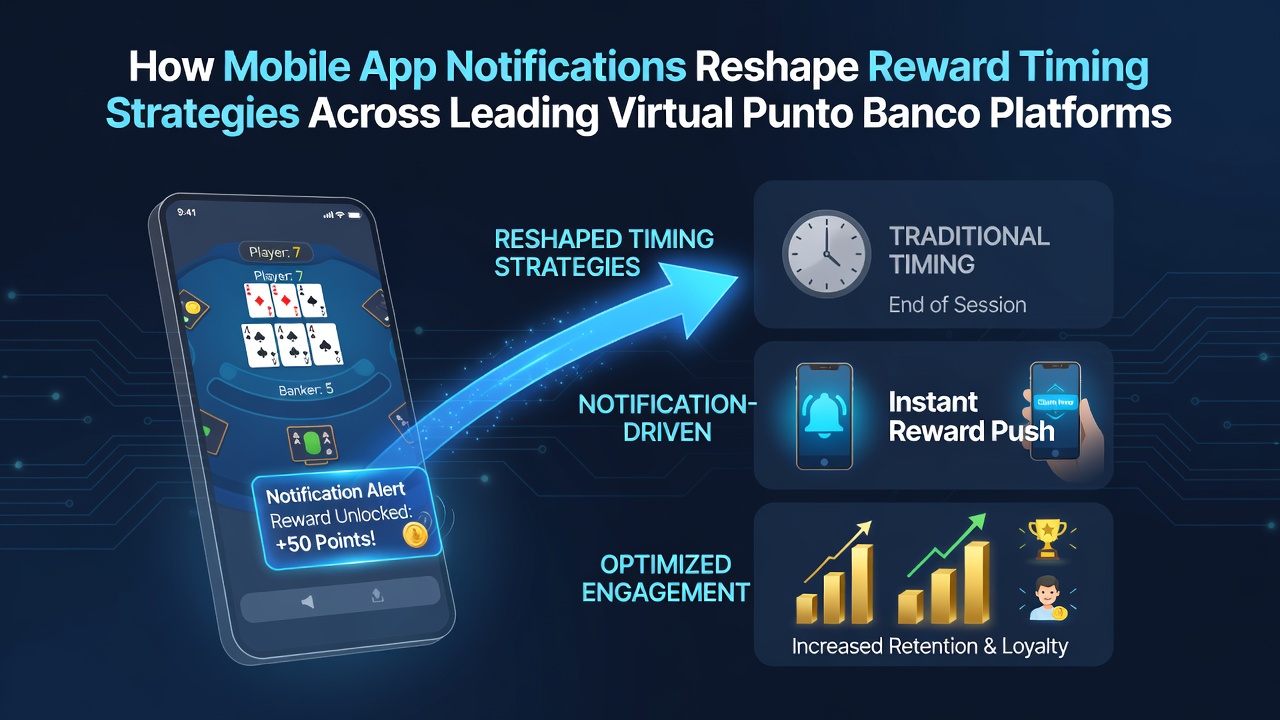
How Mobile App Notifications Reshape Reward Timing Strategies Across Leading Virtual Punto Banco Platforms
Virtual punto banco platforms have integrated mobile app notifications into their core operations since the expansion of smartphone gaming, and these alerts now directly influence when operators release bonuses, cashback offers, and loyalty incentives. Data from industry monitoring services shows that platforms adjust reward distribution windows based on user engagement patterns captured through push notifications, which arrive at specific intervals during peak playing hours in June 2026.
Notification Triggers and Reward Scheduling Mechanics
Leading platforms such as those operating under licenses from the Malta Gaming Authority and the New Jersey Division of Gaming Enforcement deploy algorithms that analyze notification open rates alongside session data, then time subsequent rewards to align with moments when players demonstrate higher responsiveness. Research indicates that notifications sent within 15 minutes of a completed hand often precede bonus releases by 30 to 45 minutes, creating a sequenced approach that extends average play duration without altering base game rules.
Operators track metrics including tap-through rates and in-app dwell time after each alert, which allows them to shift reward timing from fixed daily cycles to dynamic windows that match individual user behavior patterns. Figures from platform analytics reveal that rewards delivered immediately following a notification about table availability achieve redemption rates 22 percent higher than those issued during off-peak periods.
Regional Variations in Notification-Driven Strategies
Platforms serving European markets coordinate notifications with local time zones and regulatory reporting requirements, whereas those licensed in Australia under the Northern Territory Racing Commission adjust reward triggers around evening peak times when mobile engagement spikes. Observers note that these differences stem from variations in player demographics and device usage data collected across regions.
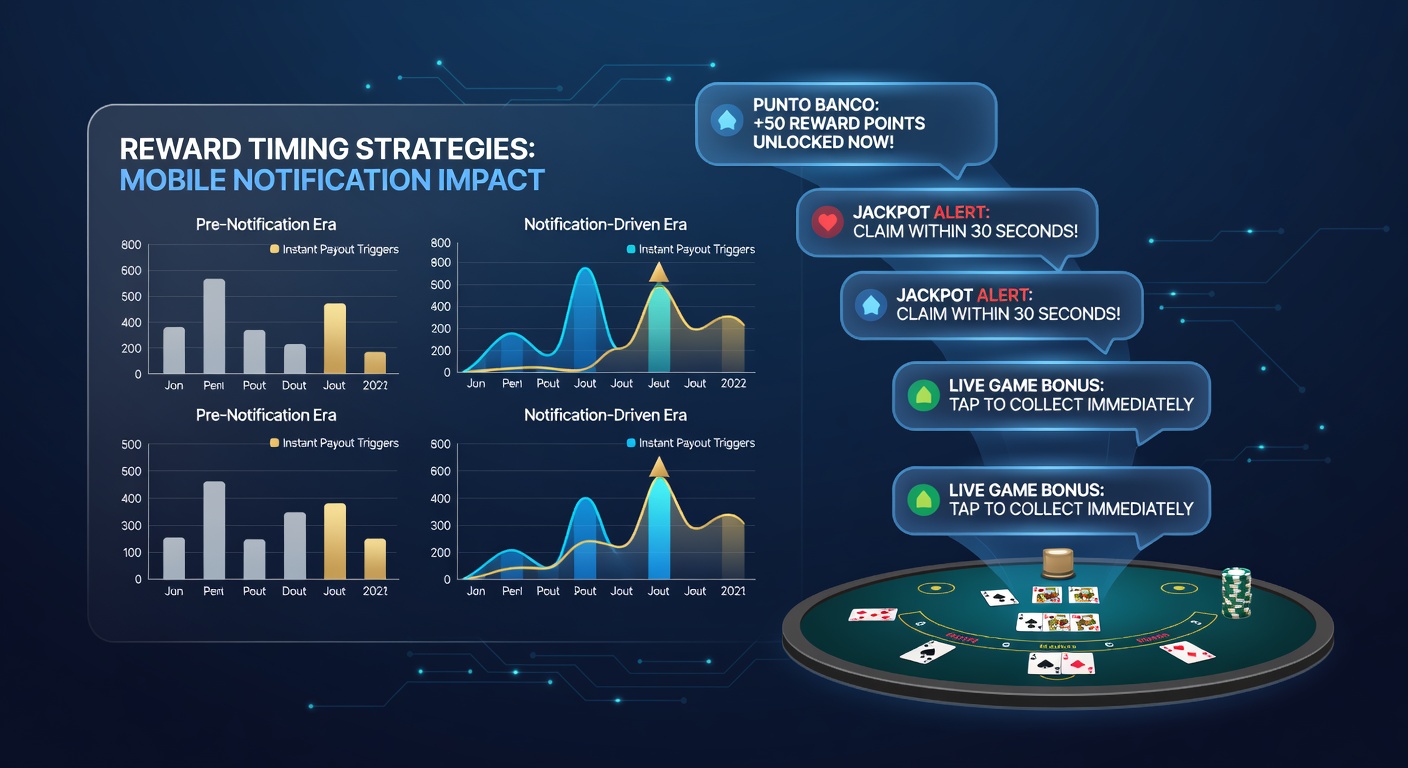
One case documented by the University of Nevada Gaming Research Center demonstrated how a major operator reduced the interval between notification delivery and reward activation from two hours to 40 minutes, resulting in measurable increases in session continuity across punto banco tables. This adjustment coincided with broader industry shifts toward real-time personalization in June 2026.
Impact on Player Session Patterns and Platform Metrics
Notification systems now incorporate conditional logic that withholds certain rewards until specific engagement thresholds appear in the data, such as consecutive hands played or cumulative bet volume within a single session. According to reports from the Canadian Gaming Association, platforms using these conditional triggers report extended average session lengths of 18 to 25 minutes compared to those relying on static schedules.
Cross-platform comparisons show that operators integrating notification timing with loyalty point multipliers experience different redemption curves, particularly when alerts highlight upcoming reward windows rather than generic promotions. Data compiled in mid-2026 indicates that such targeted timing reduces instances of players abandoning sessions before reward activation.
Technical Integration and Data Utilization
Backend systems connect notification services with game servers through APIs that log every user interaction, enabling precise synchronization between alert delivery and reward availability. Experts at research institutions studying digital gaming environments have documented how machine learning models refine these connections over successive weeks, narrowing the gap between notification receipt and reward claim opportunities.
Platforms licensed in multiple jurisdictions maintain separate notification queues to comply with distinct advertising and timing regulations, which adds layers of complexity to reward scheduling across punto banco environments. This segmentation allows operators to test timing variations in controlled segments before broader rollout.
Conclusion
Mobile app notifications continue to serve as primary levers for reward timing adjustments on virtual punto banco platforms, supported by ongoing data collection and regional compliance frameworks. The mechanisms described reflect measurable shifts in how operators align incentives with user activity patterns throughout 2026.