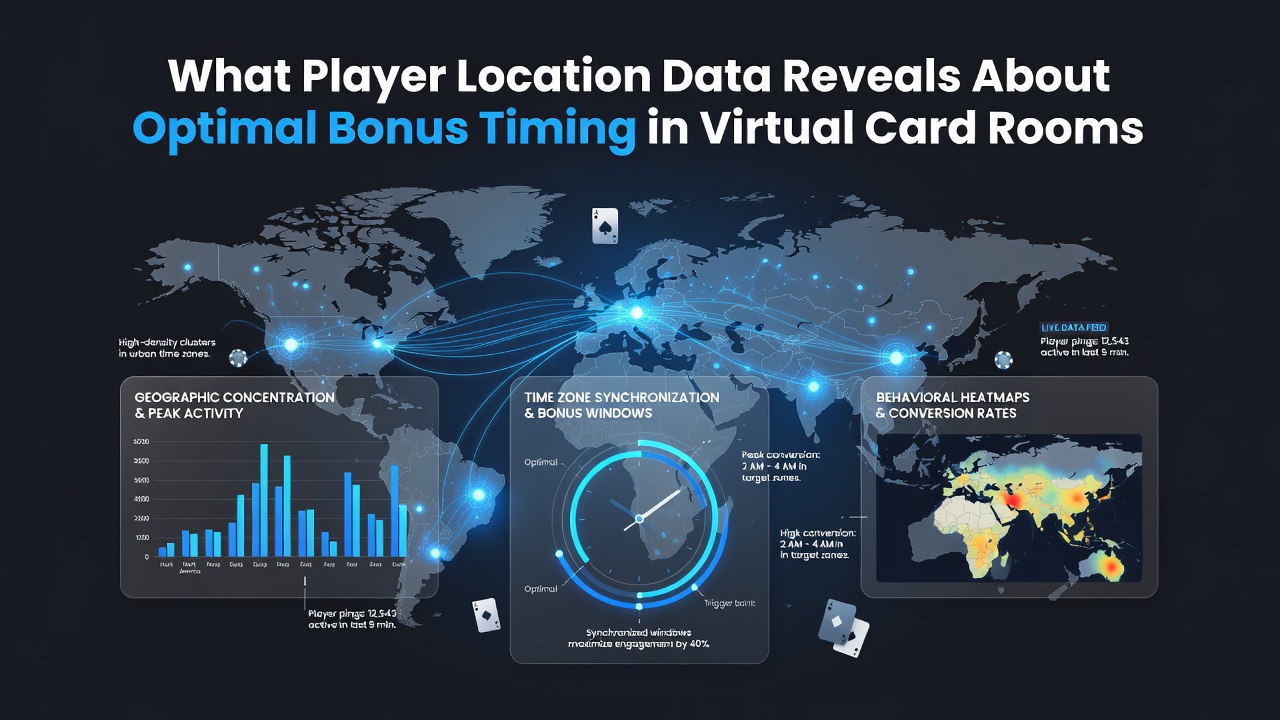
Geospatial Clues Shape Bonus Timing Strategies Across Virtual Card Platforms
Player location data from virtual card rooms has started to map out distinct patterns that tie geographic signals to the best moments for activating bonuses, and operators have begun adjusting promotional schedules based on these insights since early 2025. Aggregated mobile and desktop coordinates reveal clusters where users from specific regions engage more deeply during certain hours, which allows platforms to align bonus drops with peak local availability rather than blanket global releases.
Regional Activity Clusters Drive Timing Adjustments
Data collected across major platforms shows that players in North American time zones tend to respond to reload offers between 8 PM and midnight local time, whereas sessions originating from European locations peak earlier in the evening around 6 PM to 9 PM. Researchers tracking IP-derived coordinates note that these windows coincide with commute endings and household routines, so bonus notifications timed to those intervals produce higher claim rates without increasing overall marketing spend. Platforms that shifted their bonus calendars in line with these findings recorded measurable lifts in session starts during August 2026 compared with the previous year.
How Coordinates Influence Session Length
Analyses of play duration versus location indicate that users connecting from urban centers maintain longer sessions when bonuses activate during mid-week evenings, while suburban and rural coordinates correlate with stronger weekend uptake. One study released by the Australian Gambling Research Centre examined over 2 million sessions and found that location-tagged bonuses delivered at the start of local prime time extended average play by 14 minutes per user. Operators now feed these coordinates into scheduling algorithms that stagger offers across time zones instead of pushing identical promotions simultaneously.
What's interesting is how cross-border players create overlapping patterns, since many maintain accounts while traveling. When a user moves from one region to another the platform detects the shift and can trigger a location-adjusted bonus within the new window, which keeps engagement steady even as routines change. This approach relies on anonymized aggregates rather than individual tracking, yet the resulting data still highlights reliable geographic rhythms.
Device Type and Location Intersections
Mobile users in dense metropolitan areas show higher bonus redemption when offers appear during lunch breaks or early evening commutes, according to aggregated logs reviewed by the Nevada Gaming Control Board in its 2026 quarterly report. Desktop sessions originating from fixed locations, by contrast, align better with late-night windows when household internet usage stabilizes. Platforms that layer device signals onto location data have refined their push-notification timing to match these intersections, which reduces opt-out rates and improves the perceived relevance of each offer.

Yet the same datasets reveal exceptions during major local events, such as sports finals or public holidays, when activity spikes shift by two to three hours. Algorithms that incorporate event calendars alongside location feeds can preempt these changes and move bonus windows accordingly, maintaining consistent uptake even when normal patterns break.
Regulatory Context and Data Sharing Practices
European regulators have encouraged anonymized location reporting as part of responsible gaming frameworks, while Canadian provincial bodies have begun requiring periodic summaries of how promotional timing affects player behavior. These requirements have pushed platforms to publish high-level findings that confirm geographic clustering without exposing personal details. The resulting transparency helps smaller operators adopt similar timing models without needing to build large internal datasets from scratch.
Industry reports from the European Gaming and Betting Association further note that location-aware bonus systems have reduced instances of bonus fatigue, since offers reach users when they are actually online and ready to engage. Rather than flooding every account at once, staggered releases respect regional rhythms and keep the promotional calendar feeling fresh across different player bases.
Future Applications of Location-Based Scheduling
Emerging tools combine location signals with weather or transit data to anticipate short-term disruptions, allowing last-minute bonus adjustments when storms or strikes alter typical login behavior. Early tests conducted in 2026 demonstrated that such dynamic shifts maintained redemption rates even during unexpected regional events. Observers note that continued refinement of these models could extend to predictive alerts, where platforms notify users of upcoming bonuses based on their usual location patterns rather than fixed schedules.
Conclusion
Location-derived timing strategies have moved from experimental pilots to standard practice in many virtual card rooms, driven by measurable improvements in session metrics and player responsiveness. As datasets grow and regulatory expectations around transparency increase, platforms continue to refine how geographic coordinates inform bonus windows without compromising privacy standards. The patterns uncovered so far demonstrate that optimal timing is rarely universal, but instead emerges from the intersection of place, device, and local routine.