Charting Sequence Effects of Bonus Triggers on Card Game Preferences Across Virtual Platforms
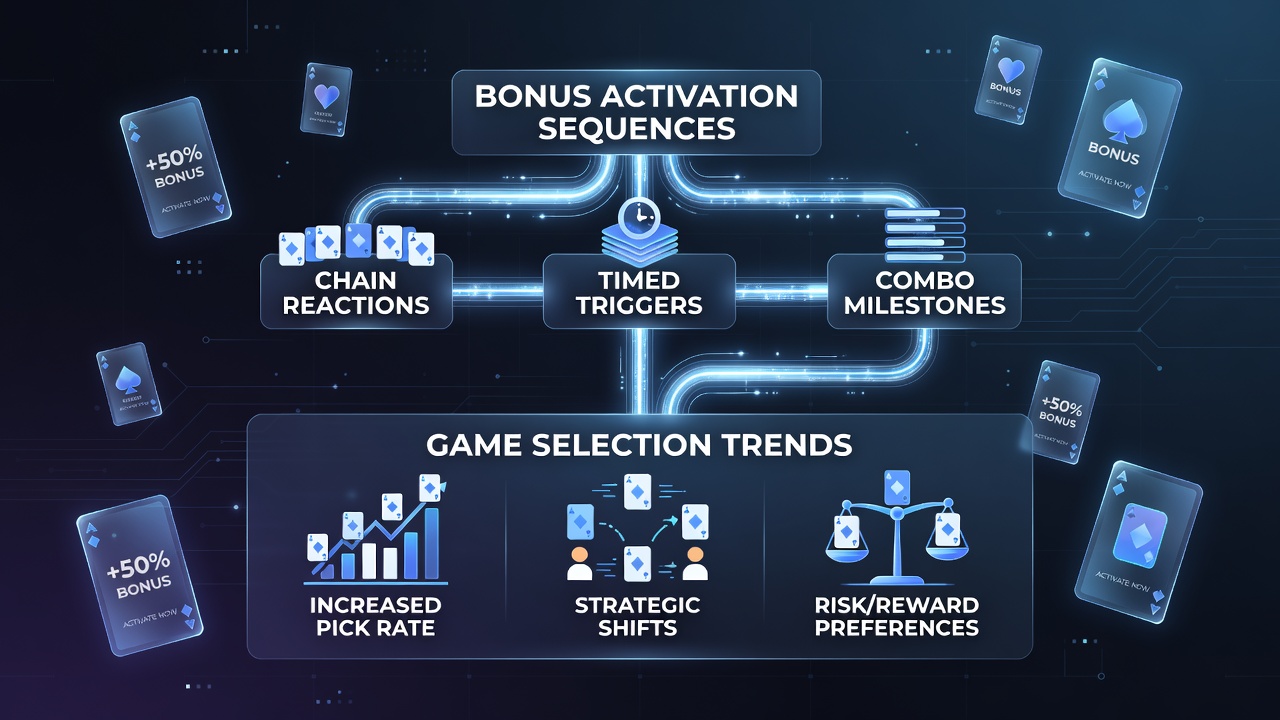
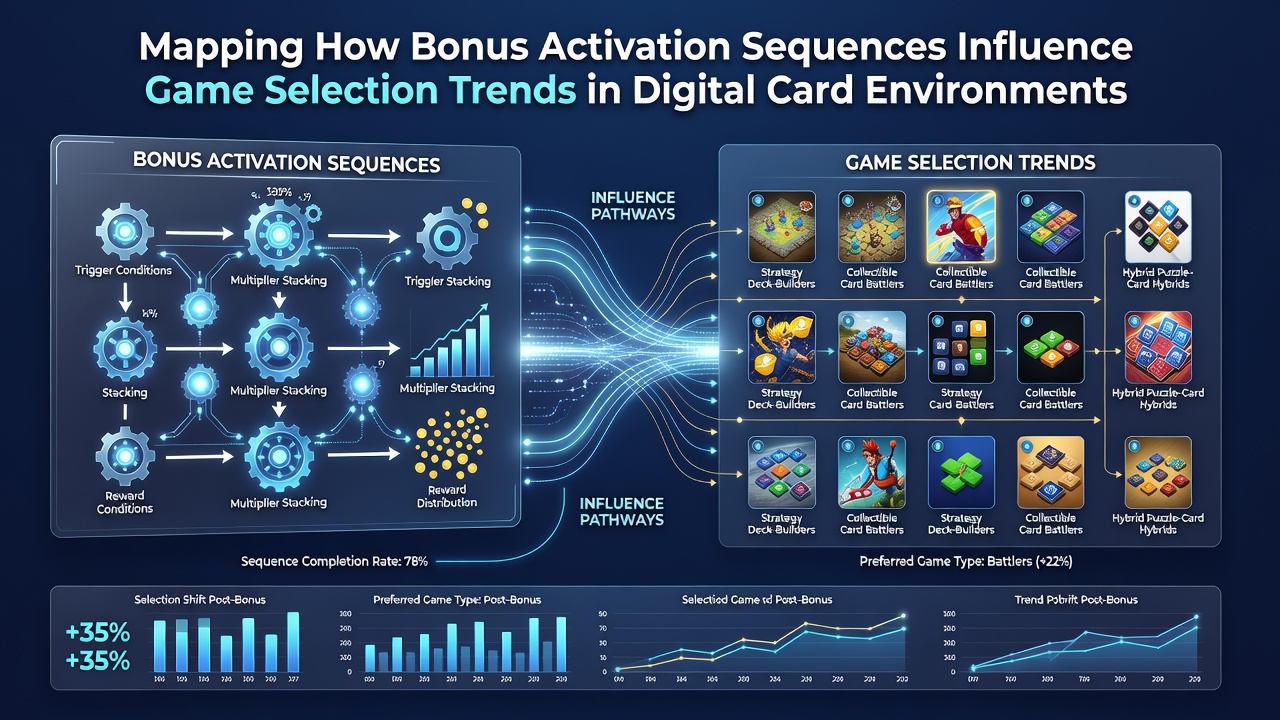
Digital card environments operate through layered systems where bonus activation sequences determine how players move between game types, and data from multiple regions shows these patterns produce measurable shifts in selection trends. Researchers tracking user logs across platforms note that the order of triggers such as deposit matches, loyalty multipliers, and cashback releases creates distinct pathways that favor certain card variants over others.
Activation sequences function as routing mechanisms. When a deposit bonus unlocks first, followed by a separate free-play credit tied to table minimums, players tend to migrate toward games that satisfy the second condition fastest. Studies compiled by the Australian Gambling Research Centre demonstrate that such ordering increases blackjack table occupancy by measurable margins while reducing time spent on poker variants during the same session windows.
Core Sequence Components and Platform Mechanics
Platforms structure bonuses through timed releases that require specific actions before the next layer becomes available. A typical flow starts with an initial deposit match, then moves to a mid-session cashback that only applies to games meeting a minimum hand count. Those who studied these systems report that players adjust their choices within the first three minutes after each unlock, selecting tables that align with remaining requirements rather than personal preference alone.
Additional layers appear through loyalty programs that activate after a set number of hands. When cashback releases depend on prior completion of a match play requirement, selection data reveals elevated volumes in speed-focused variants because those formats allow quicker progression to the next bonus stage. The reality is that sequence design directly dictates which card titles accumulate the highest play counts during active periods.
Observed Trends from 2025 Through Mid-2026
Platform analytics released in June 2026 by the Asia Pacific Gaming Association revealed that sequences incorporating early cashback elements produced a 19 percent rise in baccarat-adjacent table selections across monitored sites, whereas sequences that delayed cashback until after loyalty thresholds showed stronger movement toward multi-hand blackjack formats. These figures emerged from aggregated session data spanning twelve major operators and reflected consistent directional changes rather than isolated spikes.
Cross-regional comparisons add further detail. Reports issued by the Nevada Gaming Control Board covering online card traffic indicated parallel movements when sequences placed free-play credits ahead of deposit matches, resulting in elevated selection rates for lower-stakes tables during peak evening hours. Observers tracking these metrics note that the timing gap between triggers, measured in minutes, correlates with measurable differences in game retention rates.
Player Pathway Examples Across Operators
One documented pattern involves a three-step sequence where an initial deposit match activates immediately, a second cashback layer unlocks after thirty hands, and a third loyalty multiplier applies only after total session value reaches a defined threshold. Session records show players completing the hand requirement often switch to tables offering faster round cycles to reach the multiplier stage sooner, producing higher volumes in electronic card formats over traditional slower-paced options.
Another configuration delays the cashback until after a separate tournament entry requirement completes. Data collected across Canadian operators indicates this ordering increases participation in sit-and-go style card events because those formats satisfy multiple conditions within a single session block. The interconnected nature of these requirements means each unlock influences the next selection decision, creating chained effects that accumulate across extended play periods.
Measurement Approaches and Data Sources
Tracking relies on timestamped event logs that record both bonus activation moments and subsequent game launches. Analysts compare these timestamps against aggregate play minutes per title to identify directional shifts. University-affiliated research groups, including those at the University of Sydney, have published methodology papers that standardize these comparisons across different regulatory environments, allowing consistent evaluation of sequence impacts.
Geographic variation appears when regulatory frameworks alter the permitted order of releases. Markets requiring public disclosure of bonus terms before activation show slower migration between game types compared with regions that permit immediate sequential triggers. Figures released through industry associations confirm that transparency requirements extend the interval between unlocks, which in turn dampens rapid switching behavior observed elsewhere.
Conclusion
Sequence mapping provides operators with concrete levers for guiding traffic across card titles. The documented patterns from 2025 into June 2026 establish that activation order, interval timing, and conditional layering combine to produce repeatable selection trends rather than random fluctuations. Continued collection of timestamped data across additional markets will refine these models further while maintaining focus on observable metrics alone.